Why Wont the Skull Trooper Come Up Again
Why Digital Article of clothing is 2021's Most Heady Tech Trend
Imagine a world where your apparel are made of pixels rather than textiles.
One in three women considers a slice of wearable "one-time" after 1 or two wears¹.
Fast way is popularizing the idea that peachy mode is synonymous with new outfits. Social media reinforces this mentality, with one in vi young people claiming they won't rewear an outfit if it's been seen online².
Enter digital fashion.
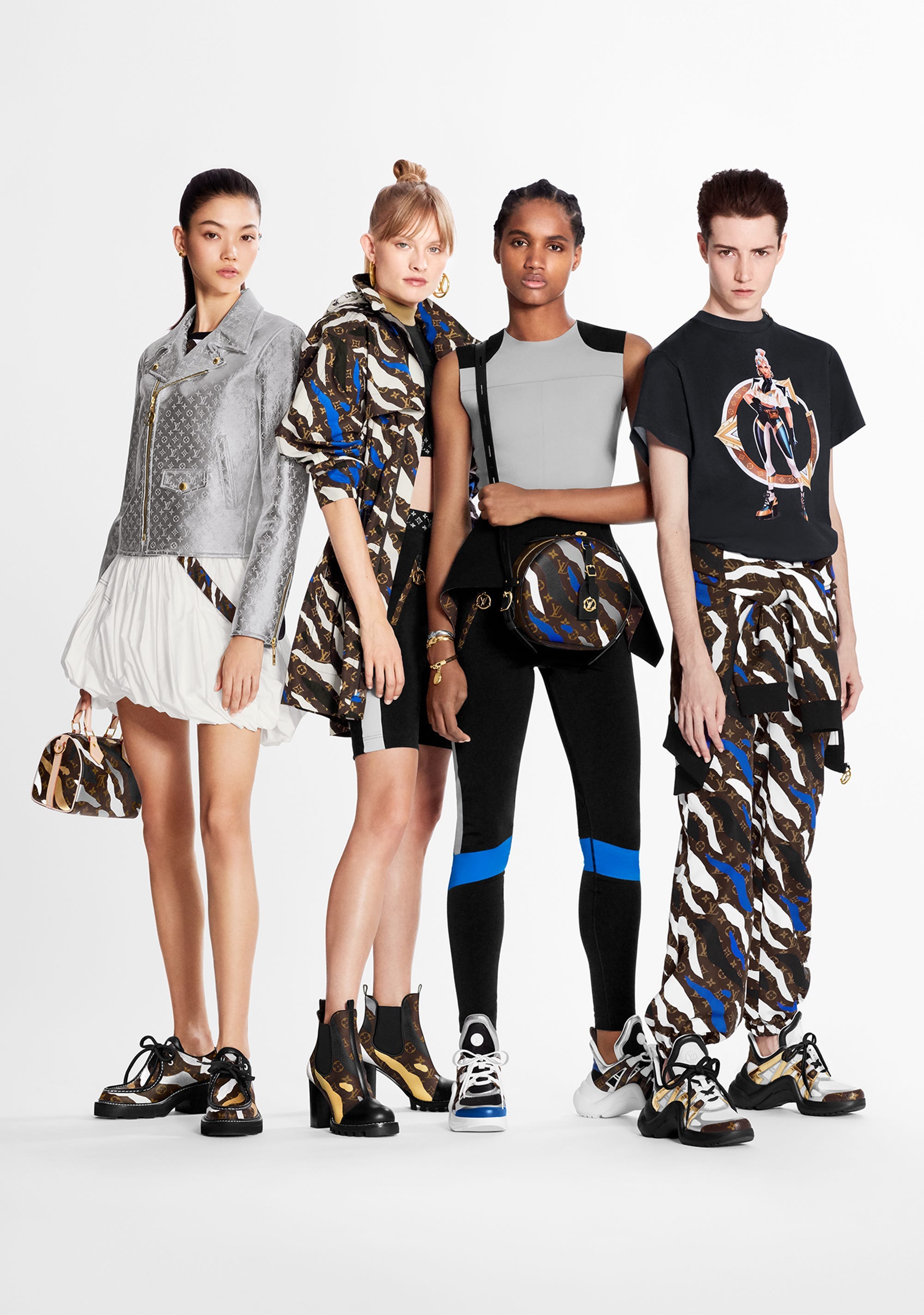

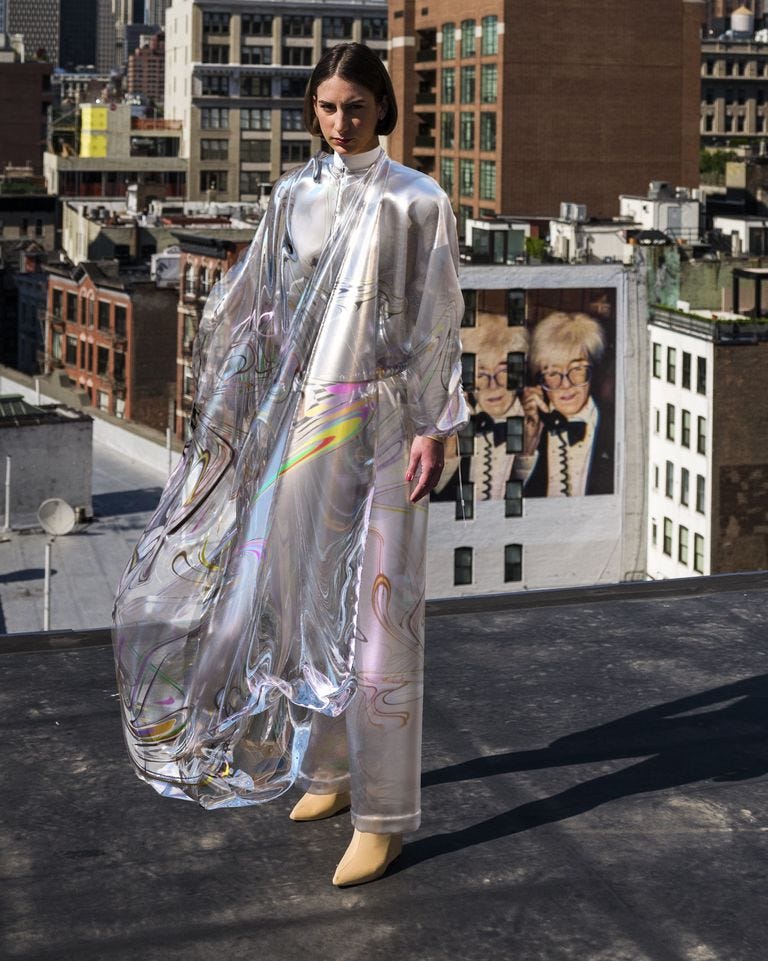
Thanks to emerging technologies, you could take all the latest and greatest style trends in your closet.
Your virtual cupboard, that is.
Digital clothes, made from pixels instead of textiles, are gaining popularity³.
In existent life, you could take a minimalist capsule wardrobe. Meanwhile, on social media, your digital self could be expressive with hundreds of new clothing items.
In short, you lot get the best of both worlds.
It's non new. Digital way has already infiltrated gaming culture.
On its surface, digital manner may seem like something from the future. Nonetheless, curating our digital appearance is already a big part of everyone'south life. From cultivating an Instagram aesthetic to putting your all-time foot frontward on LinkedIn, we are thoughtful virtually our online impressions.
(Hopefully!)
For gamers, digital fashion takes the form of "skins": outfits and weapons that decorate the in-game avatars. On Fortnite, a typical pare costs between $2 and $20 USD⁴. The skins are just for the aesthetic and do not impact the role player's abilities, illustrating a market for virtual self-expression.
Some of the rarest and most sectional skins, like the Skull Trooper Skin, are resold online for thousands of dollars⁵.
Experts predict the marketplace for "skins" in video games will hit $50 billion USD by 202²⁶.

Louis Vuitton and League of Legends: an Unlikely Partnership
In 2019, the luxury make, Louis Vuitton, designed a series of skins for League of Legends, a popular multiplayer game⁷. Following its digital release, Louis Vuitton created real-life pieces to compliment the skin collection.
To everyone's surprise, the once-nerdy world of esports has been infiltrated by high fashion.
A Quick History Lesson in Digital Fashion
In 2018, Carlings, a Scandinavian retailer, launched the world's first digital-merely clothing drove. Each of the 19 pieces were sold for £9 to iii⁰⁸. Customers would provide Carlings with a photo, and a squad of 3D designers would edit the digital outfit onto the client.
"By selling the digital collection at £15 per item, we've sort of democratized the economy of the fashion industry," said Kicki Perrson, a brand director at Carlings⁹.
The success of their beginning digital drove encouraged Carlings to experiment further. In 2019, they created the get-go augmented reality graphic tee dubbed the "Last Statement T-Shirt¹⁰."
This meridian uses Spark AR technology and a smartphone to digitally alter the shirt'south graphic design¹¹. When paired with custom Instagram and Facebook filters, the shirt'south design seamlessly changes. Their website claims you tin can display dozens of letters or designs "without ever having to purchase another t-shirt".

Digital Couture Sold Via Blockchain Technology
In May 2019, the globe'southward first digital couture dress was sold on the Ethereum blockchain¹². Different Carlings' affordable digital pieces, this high-fashion production sold for $9,500 USD. The digital manner house, The Fabricant, created this one-of-a-kind pattern.
Trading Physical Products for Digital Experiences
A popular-up shop in London, known every bit HOT:SECOND, encouraged consumers to give digital mode a chance. At HOT:SECOND, visitors could trade physical products for digital experiences. Visitors could donate an particular of unwanted wear to the clemency, Dearest Not Landfill. In exchange, they could endeavour on a variety of digital garments ranging from Couture to Streetwear.
Why Digital Dress Tin Take the Way Manufacture by Storm
one. Digital Fashion is a Sustainable Solution to Fast Fashion
Eight to 10 percent of global greenhouse gas emissions come up from the fashion manufacture¹³.
Near three-fifths of all wear produced ends upward in incinerators or landfills within years of existence made¹⁴.
Digital clothing allows consumers to live out their fast mode fantasies while drastically reducing the ecology impact.
When you lot buy a piece of digital clothing, you aren't just reducing the impact of that ane t-shirt. You are also reducing waste generated during the blueprint and sampling procedure. The firm, Dress-X, claims that the total carbon footprint of producing one digital item is 95% less than an boilerplate physical garment¹⁵.
Even large retailers with physical products tin benefit from digital mode without changing their product offerings. For example, PUMA partnered with The Fabricant to create a sheathing collection, 'Day Zip', that had a depression ecology bear on¹⁶. For this campaign, PUMA created a digital proof of concept that eliminated the need for sampling, treatment, traveling, and other logistics. Once the proof of concept was perfected, they produced and sold the concrete production.
2. Digital Style Reduces Production Costs and the Time to Market
Past adapting their product innovation process, PUMA reduced their water usage by up to 17.4% for this collection¹⁷. PUMA also reduced their time to market and costs by 30%.
3. It'southward Body and Gender Inclusive
Digital mode promotes the idea that anyone, regardless of body type, size, or gender, can wear annihilation. It gives a whole new meaning to the phrase "1 size fits all."
The majority of, if not all, digital fashion brands provide genderless, and sizeless pieces. Digital clothing tin truly exist universal.

4. It Provides Countless Possibilities for Creative Self-Expression
Digital designers are not limited by silly things like gravity and physics. Designers can experiment with materials and textures.
"Within the digital world, we can go completely crazy. We can clothing a apparel made of h2o or have lights everywhere and change your textile co-ordinate to your mood," says Amber Slooten, the co-founder of The Fabricant¹⁸.
Ultimately, this opens the door for more self-expression. Yous could find pieces that reflect a more abstruse version of how you wish to exist seen.

The Current Limitations to Digital Fashion
The Technology Isn't Quite In that location… Yet!
At the moment, digital style firms rely on employees digitally plumbing fixtures the outfits to a client's photo. This procedure of "digital dressing" typically uses 3D modelling software. Some firms apply CGI software to digitally edit or "fit" the clothes onto the customer.
"The technology, in general, is non in that location even so to recognize a body to implement [digital dressing]," explains Natalia Modenova, the co-founder of Dress-X¹⁹. "The AI is non there to entirely automate this process."
Digital dressing is by no means instantaneous. For example, it takes the house Tribute between three and five hours to customize the digital garment to one's photo.
Nonetheless, technology volition quickly improve.
Recall of how bad those first few Snapchat filters were.
I'yard excited for the day where you lot can stream a video while wearing a digital outfit.
It'due south Expensive
It's already hard to justify buying an expensive piece of clothing that you can wear in real life. If it wasn't, exploitive and unsustainable fast fashion wouldn't be popular.
(I'm every bit guilty as anybody for indulging in fast style, so no judgment!)
In general, we undervalue digital goods. One study constitute we're simply willing to pay $1 for a digital photograph, yet we'll pay $3 for a physical image²⁰. Another study found nosotros are willing to pay more for a concrete copy of a book ($nine.59 on average) than a digital version ($six.94)²¹.
You may call up the average person is non going to buy wear that they can't really wear.
Even so, once you consider the potential cost of the digital particular, this may change.
You may non spend $40 on a digital superlative, just you might spend $v.
Remember, at that place is a proven market for digital way…
Yes, gamers buy skins for their in-game avatars.
(As I said, it'due south expected to be a $l billion USD manufacture.)
But, gamers are non lonely. Members of Zwift, an indoor cycling app, use the in-game currency to purchase biking gear for their digital avatars²². These brand-loyal cyclists often desire their digital selves to utilize the same brands and products that they use in existent life.

It is undoubtedly a bizarre idea.
Having a digital wardrobe is something straight out of a sci-fi flick.
However, the same matter was said when our parents fantasized near calling their friends through their wristwatches. Today, there'southward a whole industry of smartwatches that connect people across the globe.
While I don't plan on switching to an entirely virtual wardrobe anytime soon, the concept of digital fashion has caught my attention.
I run into my online persona every bit an extension of myself.
Every bit a way of curating how I want to be seen.
I am most excited nearly the possibilities digital style provides for cocky-expression and sustainability.
Are you interested in digital manner, and if so, what would you pay for a digital outfit?
Source: https://uxplanet.org/why-digital-clothing-is-2021s-most-exciting-tech-trend-64717db6856b
0 Response to "Why Wont the Skull Trooper Come Up Again"
Post a Comment